


If you’re reading this, you’ve probably spent a fair share of your late nights, and early mornings, changing soggy sheets and wondering why your child just won't wake up to go to the bathroom. You’ve probably asked yourself, “Is it deep sleep? Is it a small bladder? Or are they just... not getting it?”
The truth is, nighttime dryness isn't a behavior your child can just choose to do better at. It’s a physiological milestone. It’s a conversation between the brain and the bladder that needs to happen in the middle of a deep sleep cycle. But here’s the kicker: many of the tools we use to manage the mess are actually silencing that conversation.
At Super Undies, we call our nighttime underwear for bedwetting "Brain Trainers" for a reason. They aren't just there to catch a leak; they are designed to help rewire the brain-body connection through something called biofeedback.
Let’s dive into the science of how this actually works and why switching to washable bedwetting underwear might be the missing piece of your child's developmental puzzle.
The Sensory Void: Why Disposables Can Be a Dead End
For decades, the standard response to bedwetting has been the disposable pull-up. And hey, I get it. They are convenient. But disposables are engineered with "super-absorbent polymers" that are too good at their job. They wick moisture away so fast that the child never actually feels wet.
From a brain perspective, this creates a sensory void. If the bladder releases and the child feels nothing but a warm, dry cloud, the brain receives zero feedback. There is no signal saying, "Hey, something just happened down there!" Over time, the brain learns it can just ignore the bladder entirely during sleep because there are no consequences to deal with.
In fact, disposable pull-ups might be holding your child back by reinforcing a pattern of "passive wetting." To break this cycle, we need to reintroduce sensation.

What is Biofeedback? (The "Brain Training" Secret Sauce)
Biofeedback is a fancy word for a simple concept: using your body’s own signals to teach your brain how to function better. In the context of bedwetting, biofeedback is the immediate sensory response a child gets when they start to pee.
When a child wears Super Undies Nighttime Brain Trainers, they aren't wearing a "diaper." They are wearing a tool designed to provide a "wet" signal. Because these are made of specialized fabric rather than chemical-laden paper, the child feels the moisture the moment it happens.
This isn't about making them uncomfortable or "punishing" them with wetness. It’s about giving their prefrontal cortex: the part of the brain that manages relaxation and awareness: the data it needs to realize that the body is active while they are asleep.
The Brain-Body Loop
- The Signal: The bladder gets full and starts to release.
- The Feedback: The child feels the moisture against their skin immediately.
- The Connection: This sensory input travels up the spinal cord to the brain.
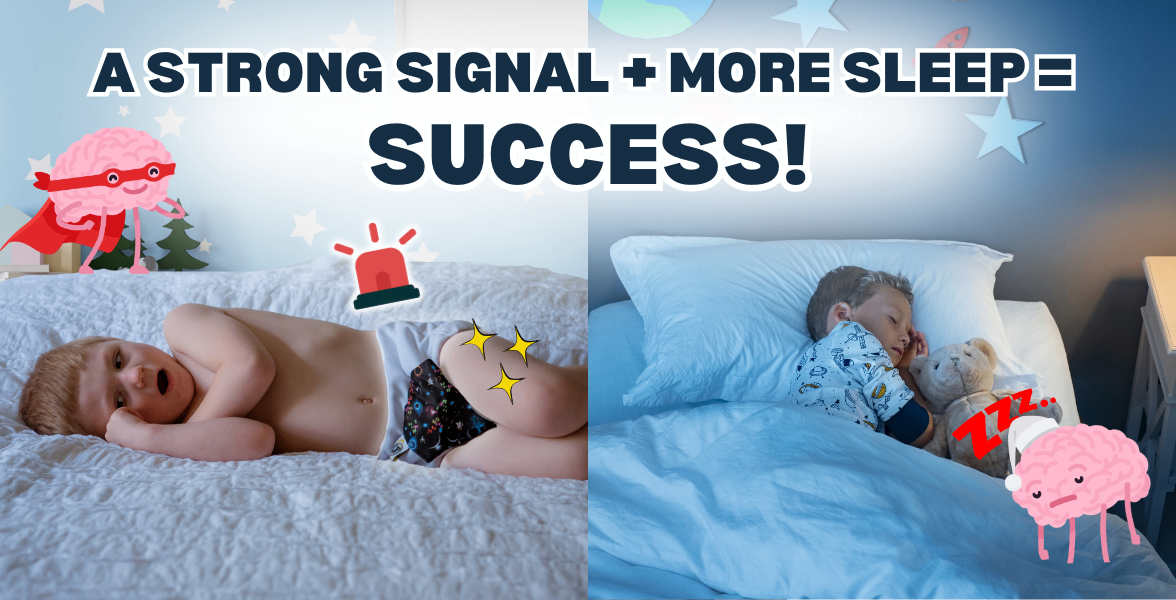
- The Response: Over time, the brain begins to associate the feeling of a full bladder with the "threat" of getting wet. Eventually, the brain starts to recognize the "full bladder" signal before the wetting happens, prompting the child to either wake up or hold it until morning.
The Science of Neuroplasticity and Sleep
You might be thinking, "But my kid is such a deep sleeper, they’d sleep through a hurricane!"
Research into neurofeedback shows that our brains are incredibly plastic: meaning they can change and adapt. Studies on brain-wave activity (specifically sensorimotor rhythm or SMR) show that we can actually train the brain to achieve more balanced activity patterns.
When your child sleeps, their brain isn't just "off." It’s actively consolidating memories and strengthening neural pathways. When you use washable bedwetting underwear that provides a physical sensation, you are giving the brain a new neural pathway to build. You are teaching the prefrontal cortex to monitor the bladder even during the deep stages of sleep.
It’s similar to how an alarm clock works. The first time it goes off, you might sleep right through it. But after a few days, your brain learns to listen for that specific sound. Super Undies act as a "tactile alarm clock" for the skin.
Why Sensory Underwear is the Better Way
A lot of parents ask us, "What makes these 'sensory' underwear?"
It’s all about the input. For kids who struggle with understanding nighttime undies, sensory input is the bridge between the physical act and the mental awareness.
Super Undies are designed with a specific fit that keeps the absorbent core close to the body. This ensures that the moment a leak starts, the skin feels it. At the same time, we’ve built in waterproof guards and "leg-locking" gussets to make sure that while the child feels wet, the bed stays dry. It’s the best of both worlds: sensory feedback for the brain, and sanity for the parents.

It’s a Process, Not a Magic Trick
I’ll be honest with you: Brain Training takes longer than just slapping on a disposable. Because we are dealing with brain development and neural pathways, it doesn't happen overnight.
You might see "the dip" before you see the progress. Your child might go from wetting once a night to wetting twice because their brain is starting to process the signals and is "resetting" its expectations. This is normal!
Success in nighttime underwear for bedwetting looks like this:
- Stage 1: Child wakes up after they have fully wet the bed. (The brain is starting to notice!)
- Stage 2: Child wakes up while they are wetting. (The brain-body connection is getting faster!)
- Stage 3: Child wakes up before they wet because they feel the urge. (The connection is made!)

The "Big Kid" Confidence Factor
There’s a massive psychological component to this as well. When a child wears something that looks and feels like real underwear, their confidence shifts. Disposables feel like baby diapers, and for a 6, 8, or 10-year-old, that can be a huge blow to their self-esteem.
Switching to Super Undies allows them to take ownership of the process. They aren't "being put in a diaper"; they are "wearing a trainer" to help their brain grow. This shift in language and gear can reduce the stress and anxiety around bedwetting, which: ironically: often helps the brain relax and learn faster.
Quick Tips for Success with Brain Trainers
If you’re ready to ditch the disposables and start the training process, here are a few tips from the CEO’s desk:
- Be Consistent: Brain training requires consistent sensory input. If you switch back to disposables on weekends, you’re essentially "muting" the signal you just spent all week trying to amplify.
- Focus on Fluid Timing: While the brain trainer does the heavy lifting, you can help by front-loading their water intake during the day and tapering off an hour before bed.
- Celebrate the Small Wins: Did they wake up as soon as they started peeing? That’s a huge win! It means the brain heard the signal. Celebrate that progress.
- Choose the Right Fit: Make sure the undies are snug. The biofeedback only works if the wet fabric is touching the skin.
Final Thoughts
Bedwetting is a developmental journey, not a disciplinary issue. By understanding the brain-body connection, we can stop managing the "problem" and start supporting the solution.
Our Nighttime Brain Trainers are more than just washable bedwetting underwear; they are a developmental tool designed to turn the lights on in a part of the brain that’s been sleeping on the job.
It takes a little more laundry, but the payoff: a confident, dry child and a permanent solution: is worth every extra load.
Ready to start training? Check out our Nighttime Collection and find the perfect fit for your big kid. You’ve got this!